

← Previous Read

Pockets get judged almost entirely on appearance. But the construction underneath decides three things that matter more:
- How easily you can get something in and out,
- How safe that thing is once it's in there, and
- How much strain the pocket can actually take.
Those three factors — accessibility, security, durability — explain most of the history below better than fashion does.
A Brief History of Pockets
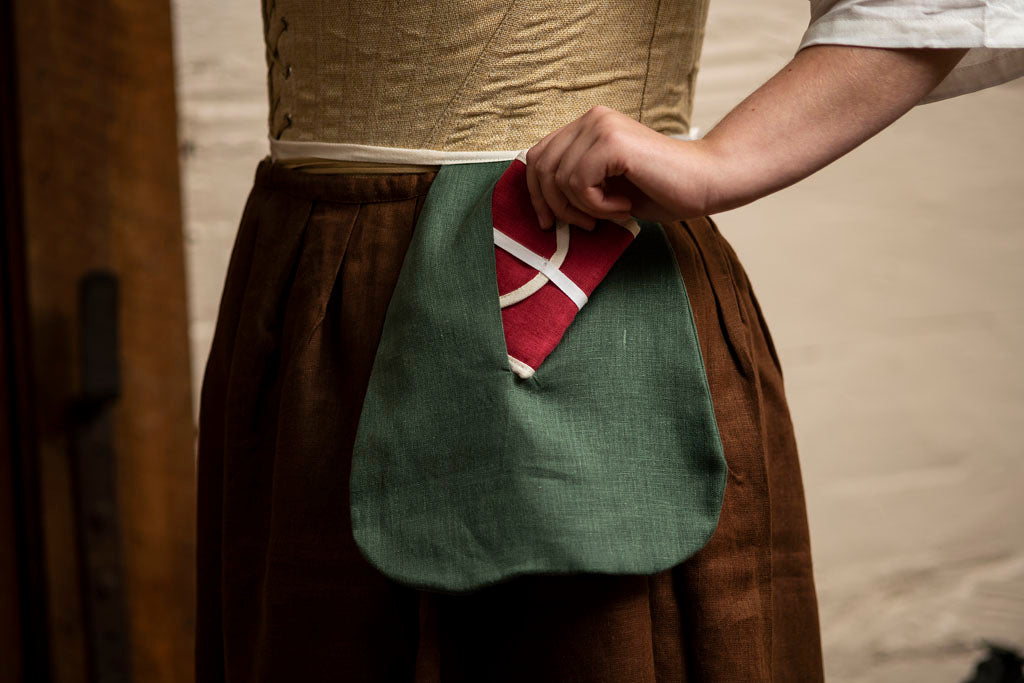
Pockets weren't always part of the garment itself. In medieval Europe, people carried pouches on a belt or girdle, and by the 13th century, tunics started appearing with fitchets — vertical slits cut into the outer layer so a hand could reach a purse worn underneath, without the purse ever being visible or removable from outside the garment.
It wasn't until the 17th century that pockets were actually sewn into the garment itself — and even then, only in men's clothing. Women continued wearing separate, external tie-on pouches beneath their skirts well into the 1800s (there's an old English nursery rhyme, "Lucy Locket," that references exactly this). It's a common misconception that women simply went without pockets for two centuries — they still had them, just not the sewn in pockets we're used to.
Why Pockets Matter
Beyond simply holding things, a pocket does a few jobs at once.
- It changes what a garment can carry without a bag, determining it's practicality and utility.
- It changes how a garment sits — heavy or bulky pockets can pull a silhouette out of shape.
- And the construction itself is a quiet signal of formality and intent: a visible patch pocket reads relaxed, whilst a slit hidden in a seam reads considered.
Choosing where and how to use a pocket (and what kind) is a real design decision, not an afterthought.
Why Accessibility and Security Matter as Much as Looks
An open pocket is fast to use, but easy to steal from. A fastened one is slower to use but more secure. Almost every pocket type below sits somewhere on that trade-off, and where it sits usually tells you what job it was actually built to do — a pocket meant for constant, quick access (a hand-warmer or patch pocket) accepts more risk; a pocket meant to protect something valuable (a buttoned flap, or something nested inside another pocket) accepts being slower to open.
Applied Pockets: Sewn to the Surface
The simplest family of pockets — a separate piece of fabric sewn directly onto the outside of a garment.
Patch Pocket

A separate piece of fabric sewn directly onto the outside of a garment, fully visible and fully open. The construction dates back to at least the 19th century, and became a workwear standard because it's fast to use even with gloved or dirty hands.
Benefits:
- The simplest and most durable pocket construction — no slit to weaken, just fabric sewn to fabric
- The fastest of any pocket to access, since there's nothing to unfasten and the mouth stays wide open
Limitations:
- The least secure pocket type covered here — contents are visible and reachable by anyone, not just the wearer
- A heavy or overloaded patch pocket sags and loses its shape permanently over time
Flap Patch Pocket
A patch pocket with a covering flap added over the opening, historically fastened with a button on field and military jackets to keep contents in during movement and keep rain out.
Benefits:
- Meaningfully more secure than a plain patch pocket, when the flap is actually fastened
- The flap adds a degree of weather protection an open pocket doesn't have
- Sometimes, the flap can be tucked inwards if ease of access is preferred
Limitations:
- Slower to access than a plain patch pocket, since the flap has to be flipped up (and undone) first
Bellows / Cargo Pocket

A patch pocket with pleated, expandable sides. It became a defining feature of early 20th-century military field gear — the British Army's safari and Norfolk-style shooting jackets used deep bellows pockets so soldiers and hunters could carry bulky equipment, usually finished with a flap to keep the contents dry.
Benefits:
- Far more carrying capacity than a flat patch pocket, without changing the pocket's footprint when it's empty
- Usually paired with a flap, giving it a security and weatherproofing advantage over a plain patch pocket
- Wide-mouthed enough to stay accessible even with gloves on
Limitations:
- The pleats add visible bulk to the garment even when the pocket isn't in use
Kangaroo Pocket

A single wide patch pocket with an opening on both sides, introduced in the 1930s by Champion Products for workers in unheated cold-storage warehouses, built specifically as a hand-warmer.
Benefits:
- Extremely fast to access — both hands can enter from either side at once
- Genuinely effective for warmth, which was the entire reason it was created
Limitations:
- The least secure pocket covered here — there's no fastening, and because it's one continuous pocket, anything dropped in from one side can slide straight out the other
Set-In Pockets: Cut Into the Garment
The opposite approach — a slit cut into the garment itself, finished with narrow strips of fabric called welts, with the pocket bag hidden inside.
Single Welt (Breast Pocket)
One narrow strip of fabric finishing a slit cut into the garment — the standard jacket breast pocket, historically sized only for a handkerchief.
Benefits:
- The cleanest, most minimal-looking pocket construction available
- Reasonably secure by default, simply because it's rarely used to carry anything worth stealing
Limitations:
- Too shallow and small for real storage — not built for frequent or practical use
Double Welt / Besom / Jetted Pocket
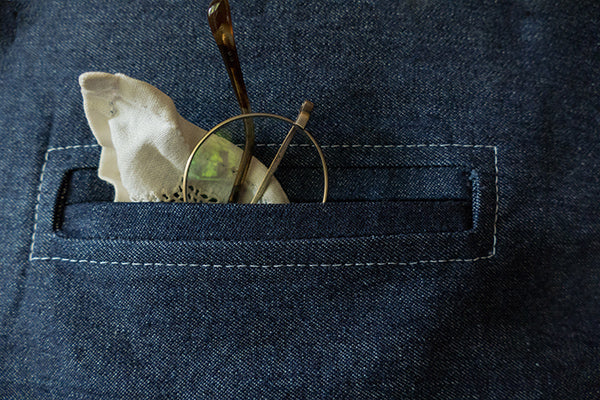
Two welts meeting at a slit — three names for essentially the same construction, standard on tailored trouser backs and jacket hips, where a visible patch pocket would look too casual.
Benefits:
- The most formal-reading pocket construction available
- More secure than an open patch pocket, since the opening is smaller and less obvious, even without a fastening
Limitations:
- Slower to access than a patch pocket
- The hardest of any pocket type to sew correctly — a welt cut wrong can't be fixed once the slit is made
Jetted Pocket with Flap

A jetted pocket with an external flap added over the opening.
Benefits:
- Modestly more secure than a plain jetted pocket
- Better protected from rain than an open welt
Limitations:
- Reads slightly less formal than a plain jetted pocket, since the flap is a visual step toward the patch-pocket family
Ticket Pocket

A small flap pocket sitting above the main pocket on country jackets, historically sized for a train ticket that needed to be reached quickly and often.
Benefits:
- Fast, dedicated access for one small, specific item — the entire reason it exists
Limitations:
- Low security, though the risk was always minor given what it was meant to hold
- Almost entirely decorative today, since few people need quick access to a paper ticket anymore
In-Seam & Inset Pockets: Hidden in the Lines
The last family of pockets — hides the opening in an existing seam, so almost nothing is added to the silhouette.
In-Seam Pocket

A pocket sewn directly into an existing seam, usually a side seam.
Benefits:
- Close to invisible in the finished garment
- Can be genuinely difficult for anyone but the wearer to notice at all, which is a real security advantage
Limitations:
- The opening can stretch permanently out of shape under heavy use without reinforcement
Slash Pocket
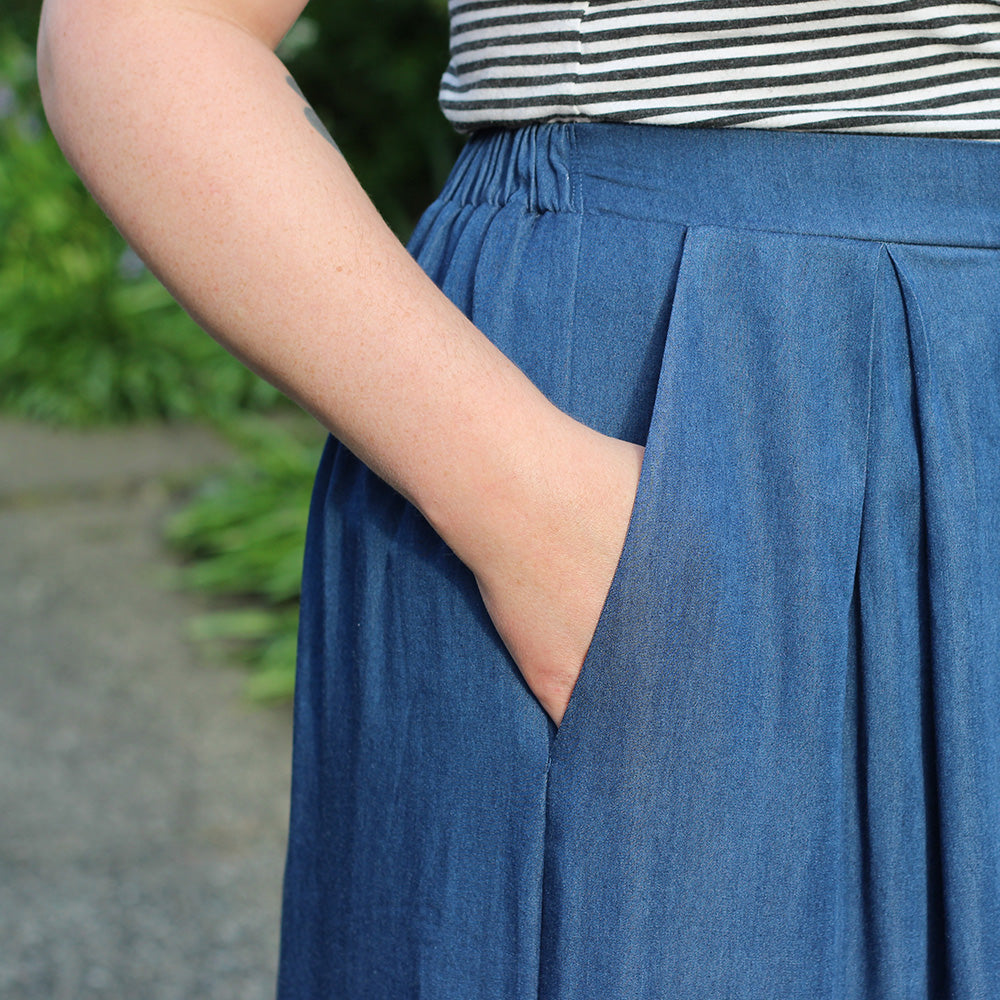
An angled opening cut into a front panel, standard on trousers and jeans specifically because the angle matches how a hand naturally moves while walking.
Benefits:
- The best balance of speed and comfort of any pocket type here, built around how the body actually moves
- Slightly more secure than a straight vertical opening, since the angle makes it harder for someone else to reach in
Limitations:
- Takes constant strain from repeated use, so the ends are usually the first part of a garment to fail without reinforcement
Coin (Watch) Pocket
A small pocket nested inside a larger front pocket. Introduced by Levi Strauss and Jacob Davis in 1873 and sized for a pocket watch, nesting it inside a larger pocket was a deliberate security decision — protecting something valuable from a pickpocket working an exposed pouch, not just saving space.
Benefits:
- Genuinely more secure than a standalone patch pocket of the same size, precisely because it's hidden inside another pocket
Limitations:
- Deliberately awkward to access — a small, tight opening, tolerable only because a pocket watch rarely needed to come out during the day
- Largely ornamental today, since almost nothing carried in pockets still needs that level of protection
The Pocket Bag: What You Don't See

Every set-in and in-seam pocket needs a lining — a separate piece of fabric called pocketing, cut lighter than the shell so it doesn't add bulk. It has to survive keys, coins, and hands going in and out, wash after wash, without tearing at the seams. It's rarely mentioned in most guides to pockets, but it's just as much a spec decision as the visible construction — a bag cut too light for what a pocket is expected to carry is one of the most common reasons a "durable" pocket fails anyway.
Where Pockets Fail
Most pocket problems are predictable: the opening stretches out with repeated use, the corners tear where the strain concentrates most, or the bag itself gives out under the weight of what's actually being carried. That's exactly why the corners of a pocket opening are almost always reinforced — rivets on denim, a bar tack on casual pieces, hand-worked reinforcement on tailoring — and why the pocket bag's fabric weight has to match what the pocket is actually meant to hold.
At Duality
Every pocket on this list is really a record of someone, at some point, deciding how much speed to trade for safety, and how much of that decision should show on the outside of the garment.
That's not just a historical curiosity to us — it's close to the same question we ask on everything we design. A detail doesn't earn a place on one of our pieces just because it's traditional or because it looks a certain way; it earns its place by doing something specific, and we'd rather understand exactly what trade-off we're making than default to whatever's most common.
Knowing this history properly is less about pockets themselves and more about a habit we try to apply everywhere:
Nothing goes onto a garment without a reason we can actually explain.


